ServicesAC Installation
AC Installation in Liberty Lake
Shop for a new air conditioner on a calm week, not during a heat wave. We size the system to the house, give you a free estimate and a written quote before any work starts, and let you choose the install day.
New air conditioning, done on your timeline
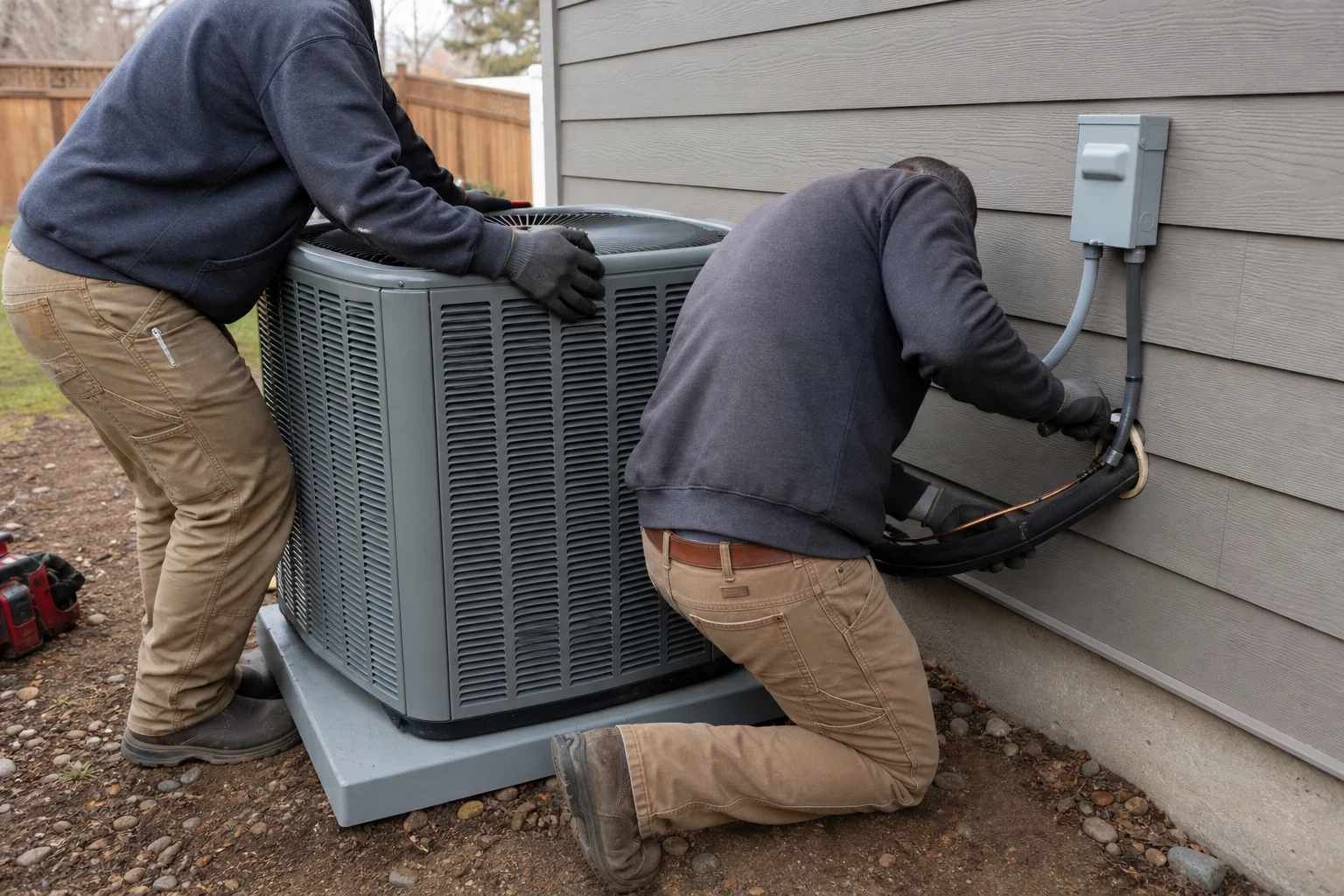
AC installation means putting in a new outdoor condenser, a matching indoor coil, a new refrigerant line set, a thermostat and the electrical connections that tie it all together. Sometimes it is a first system for a home that never had air. More often it replaces an old unit that is worn out or costs too much to keep running.
The best time to do this is before you need it. Spring and early fall are calmer weeks for us, and that gives you room to compare options and plan the cost. When a system quits on a 95 degree July afternoon, people tend to buy whatever is on the truck. We would rather help you avoid that.
If your current unit still runs but is getting old, we will tell you plainly whether a repair makes more sense for now. AC Repair is often the right call for a system with a few good years left.
What a new AC install includes
A real sizing check
We measure the house and look at windows, insulation and which way it faces. Then we size the unit to the load. An oversized unit cools fast, shuts off early and leaves the air damp and the rooms uneven.
Condenser and matched coil
The outdoor unit and the indoor coil have to be rated to work together. A mismatched pair loses efficiency and can wear out the compressor early.
New line set and pad
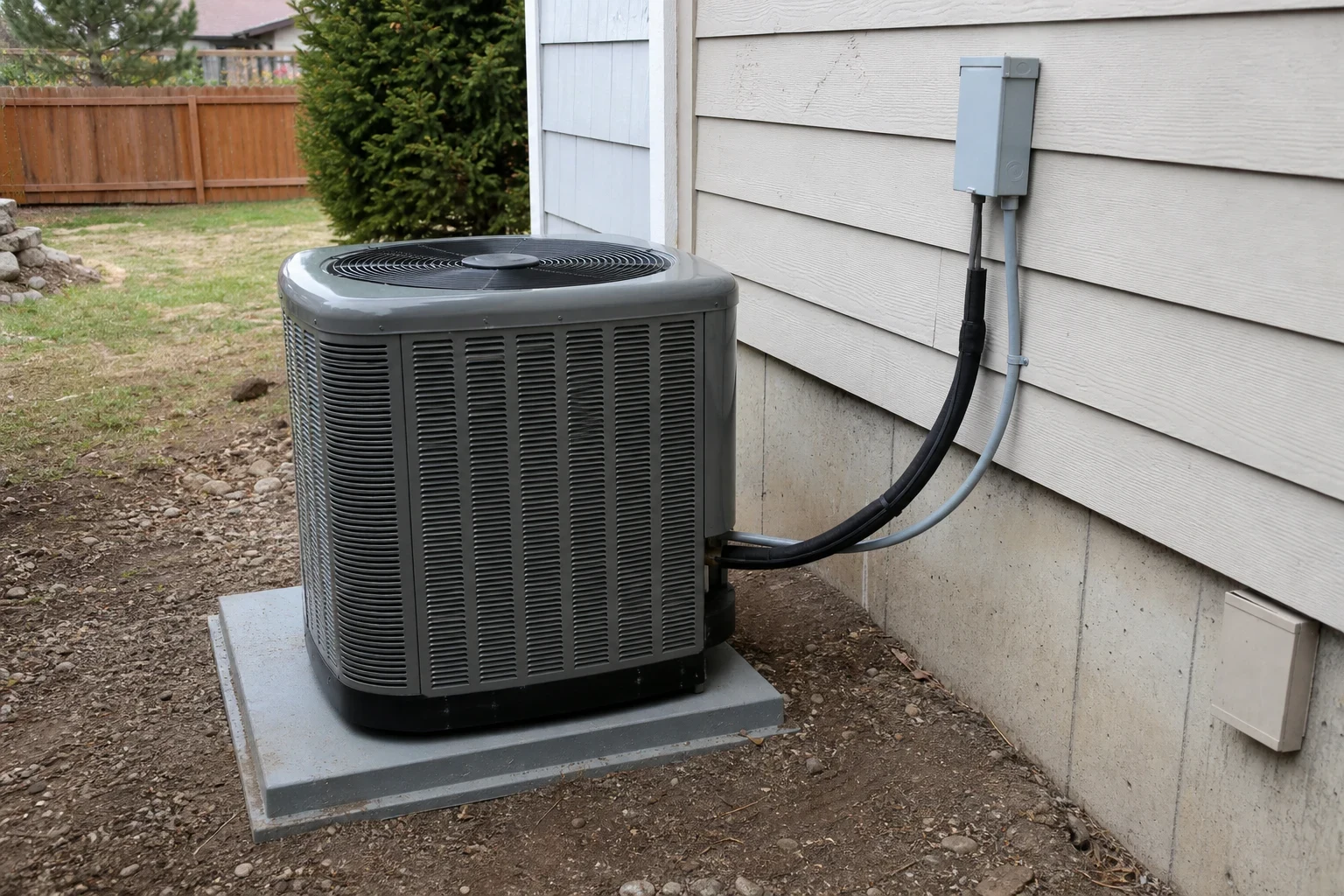
We run new copper refrigerant lines instead of reusing old ones that may hold oil from the old refrigerant. The condenser sits level on a new pad, clear of the drip line and snow slide.
Electrical and disconnect
We wire the new unit, install a service disconnect within reach of the condenser and check that the breaker matches what the unit calls for.
Thermostat setup
We install or connect the thermostat and show you how to use it. You will know which settings matter and which ones you can ignore.
Permit and cleanup
We pull the permit and schedule the inspection. We haul away the old equipment and leave the yard and the furnace area as clean as we found them.
Signs it is time to plan a new AC
The unit is 12 to 15 years old
Most central air units start costing more in repairs around this age. That is a good time to get a quote, even if it still runs.
It uses the old refrigerant
Many older systems run on R-22, which is no longer made. Recharging one gets expensive, and a leak can mean the end of the system.
Repairs keep coming back
If you have paid for a capacitor, a fan motor and a leak in the last few summers, the money may be better spent on new equipment.
Rooms will not cool evenly
An upstairs that stays hot all afternoon can point to a unit that is undersized or losing capacity.
Summer power bills keep climbing
Older units lose efficiency as parts wear. A newer, higher efficiency system can cut what you pay to cool the same house.
How the install works
- 1
Free estimate at your home
We come out, look at your current setup and measure the house. We talk through a couple of options at different price points, not just one.
- 2
Written quote
You get a written quote that lists the equipment, the labor and the permit. Nothing starts until you have it and agree to it.
- 3
Pick your date
You choose a day that works. Planning ahead lets you avoid the busiest weeks of summer.
- 4
Install day
Most replacements take one day. We shut off power, pull the old unit, set the new condenser and coil, run the line set, pull a vacuum and charge the system to the manufacturer's spec.
- 5
Startup and walkthrough
We test temperatures and pressures, check the drain and show you the thermostat. Then the inspector signs off on the permit.
What moves the cost of a new AC
No two homes come out the same. The price depends on the size of the house, the equipment you choose and what we find at your current system. Your written quote spells out each part so you can plan for it.
- System size
- A bigger home needs more cooling capacity, and larger units cost more. Sizing it right keeps you from paying for capacity you do not need.
- Efficiency rating
- A unit with a better SEER2 number carries a bigger price tag on day one but draws less power every summer after. We will show you whether that extra spend pays itself back for how often you actually run the air.
- Your furnace
- The new coil sits on your furnace and has to match its blower. If the furnace is near the end of its life, replacing both at once can save a second install day. See Furnace Installation for that side of it.
- Electrical and placement
- An older panel may need a new breaker. A long run from the condenser to the furnace means more line set and more labor.
AC installation questions
Something not covered here? (509) 512-0539
How long does an AC install take?
Most straight replacements are done in one day. A first-time install in a home that never had central air can take longer. We will tell you the expected time in your quote.
Should I replace my furnace at the same time?
Not always. If your furnace is fairly new and its blower can handle the new coil, we leave it alone. If it is old, doing both together means one install day, one permit and equipment that is built to work as a pair.
Is a heat pump a better choice than central air?
It can be. A heat pump cools in summer and heats through much of the winter, with your furnace as backup on the coldest nights. If you go that way, we can walk you through filing for Avista rebates and federal tax credits on the new unit. Our Heat Pumps page covers how that works.
When is the best time to schedule?
Spring is ideal. Early fall is a close second. You get more flexible dates, and you are not stuck making a big decision in a hurry while the house is hot.
What if my home has no ducts?
Central air moves cooled air through ducts, so a home without them needs a different setup. Ductless Mini-Splits are often a good fit there. Each indoor head cools its own room, and we can talk that through on the estimate.
Plan your new AC before summer does it for you
Estimates are free on installations and replacements. We will measure, talk options and put a written quote in your hands.