ServicesDuctless Mini-Splits
Ductless Mini-Splits in Liberty Lake
A ductless mini-split heats and cools one room or several without any ductwork. We size it to the space, mount it where it works best and hand you a written quote before any work begins, so you can plan the job and the budget on your schedule.
When a mini-split is the right call
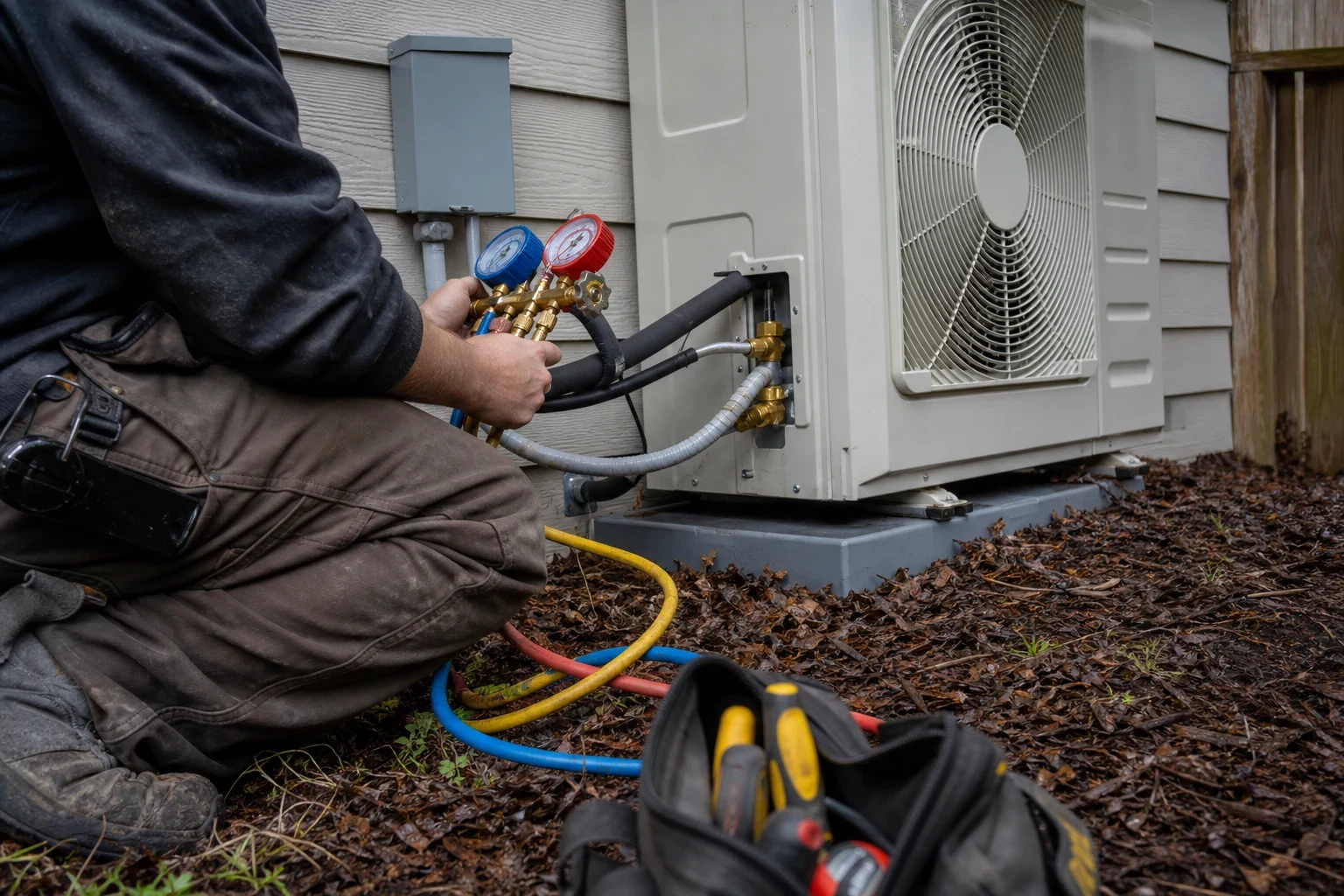
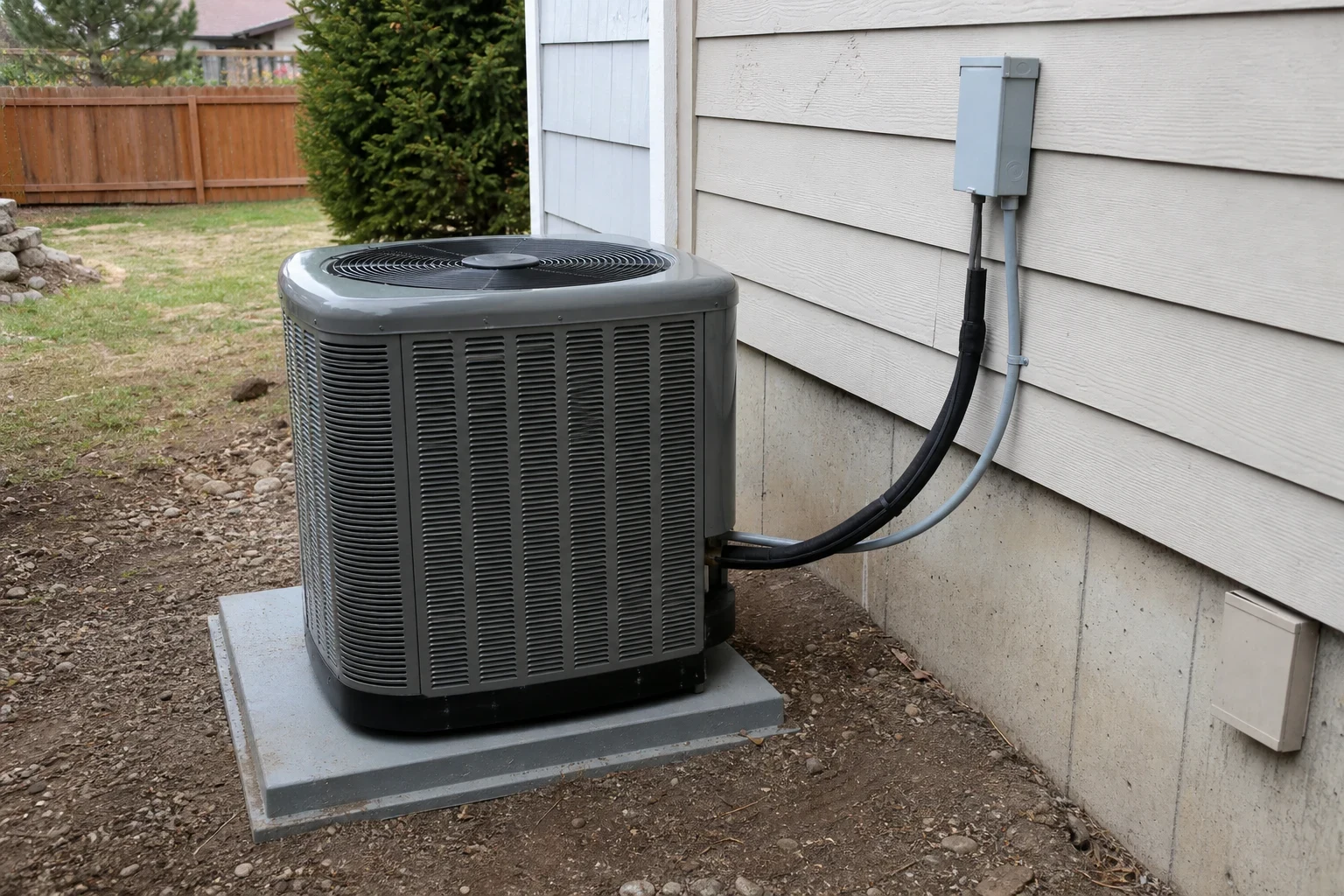
A mini-split has two parts. An outdoor compressor sits beside your home, and one or more slim indoor heads mount high on a wall or in the ceiling. A small bundle of lines runs through a hole about three inches across to connect them. Each head has its own remote, so you heat or cool only the rooms you use.
They fit best where a central system falls short. The bonus room over the garage that's always ten degrees off. A finished basement or an addition. An older home with baseboard heat and no ducts at all. A sunroom you want to use in January.
A mini-split is a heat pump, so it heats as well as cools. Cold-climate models keep putting out heat well below freezing, which is what you need through an Inland Northwest winter. If a central heat pump or a simple furnace repair would serve you better, we'll say so.
What a mini-split install includes
- Sizing each room
- We measure the room and note the windows, the insulation and how much sun it gets. Then we match each head to that space. A head that's too big runs in quick bursts and never pulls the moisture out of the air. One that's too small runs nonstop and still falls behind.
- Single-zone or multi-zone layout
- One outdoor unit can run a single head or several. We work out which rooms get a head and where each one mounts so air reaches the whole space.
- Outdoor unit set above the snow
- We put the condenser on a raised pad or wall bracket. That keeps it clear of snow and lets meltwater drain away when it runs its defrost cycle.
- Lines, drain and wiring
- Refrigerant lines, the condensate drain and the control wire all pass through one small hole, sealed inside and out. Outside, we cover the run with trim so it looks neat against your siding.
- Power and startup
- The system needs its own circuit, and we tell you up front if your panel has room. We pull a vacuum on the lines, check for leaks, then test heating and cooling at every head.
- Walkthrough and cleanup
- We show you the remote, the settings and how to rinse the filters. Then we vacuum up drilling dust and haul off the boxes.
When a mini-split makes sense for your home
A room that's always off
If you shut vents in one part of the house to push warmth into another, the main system usually isn't at fault. That space needs heating and cooling of its own.
No ducts to work with
Homes heated by baseboard or wall heaters have nowhere to send central air. A mini-split adds cooling and efficient heat without tearing into walls.
Window units every summer
Hauling window units in and out is a chore, and they're loud. A wall-mounted head is quiet and stays put.
Space heaters all winter
Plug-in heaters run up the power bill and crowd your outlets. A mini-split heats the same room for far less.
A new addition or finished space
Stretching an old system to cover new square footage often leaves both areas short. A dedicated mini-split handles the new space on its own.
Your current mini-split is acting up
Dripping water, a blinking error light or warm air in cooling mode all point to a problem. We repair mini-splits too, not just install them.
What moves the price of a mini-split
A mini-split quote comes down to how many rooms you want covered and how hard they are to reach. You get a written quote before any work begins, so you have time to budget. We also offer help claiming Avista rebates and federal tax credits on heat pumps, so ask us whether your system qualifies.
Number of zones
Each indoor head adds equipment and labor. A multi-zone outdoor unit costs more than a single-zone one but can be cheaper than buying separate systems.
Cold-climate rating and efficiency
Units built to heat in deep cold cost more up front. They're worth it if you plan to lean on the system for heat all winter.
Line length and mounting spot
A head on an outside wall near the condenser is the simplest job. Second-floor rooms, long runs and ceiling cassettes take more time and material.
Electrical work
If your panel has an open slot, the circuit is straightforward. A full panel may need extra work, and we point that out at the estimate.
How a mini-split job runs
- 1
Free estimate at your home
We walk the rooms with you, check where the outdoor unit can go and look at your electrical panel. Estimates are free on installations and replacements.
- 2
Written quote and a date
You get a written quote with the equipment, labor and permit spelled out. Spring and fall are the easiest times to schedule, so planning ahead gets you more choice of dates.
- 3
Install day
We lay drop cloths, mount the heads, set the outdoor unit and run the lines. Most single-room installs wrap up in a day, and larger multi-zone jobs can take two.
- 4
Startup, inspection and walkthrough
We test every head in both modes and show you how to run it. We handle the permit and line up the inspection.
Mini-split questions we hear
Will a mini-split keep my room warm in the dead of winter?
A cold-climate model will. These units keep heating efficiently well below freezing. On the very coldest nights, some homeowners keep a furnace or baseboard heat as backup, and we can set things up that way.
Can a mini-split replace my furnace?
In a smaller home or an open layout, a multi-zone system can carry the whole house. In larger homes, it usually works best alongside the furnace. We'll look at your home and tell you which way makes sense.
How much upkeep does a mini-split need?
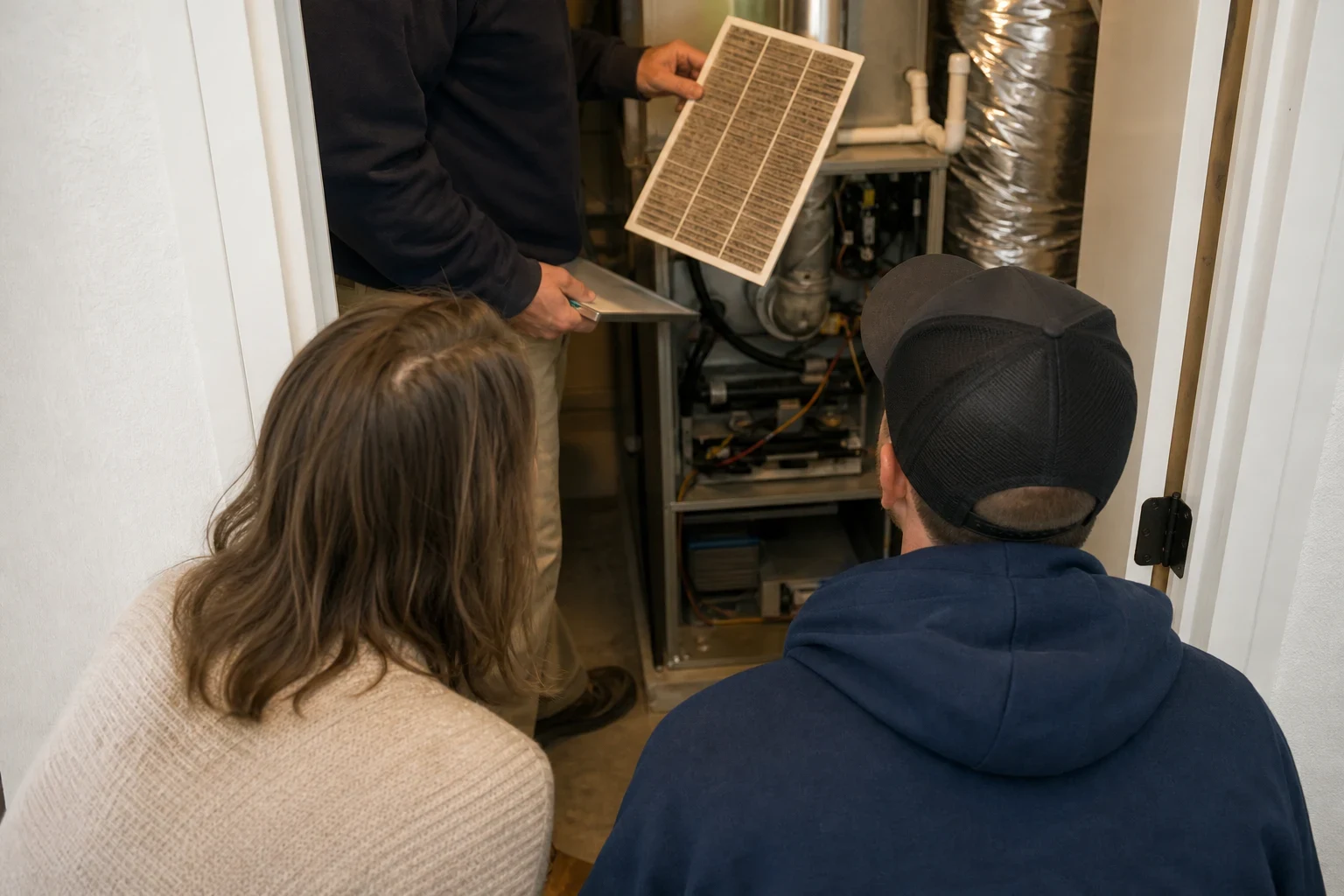
Rinse the indoor filters every month or so when it runs hard. Once a year, the coils and blower wheel need a deeper cleaning, and the outdoor unit should be checked. Our Maintenance Plans page covers yearly tune-ups.
Do I need a permit for a mini-split?
In Washington, a mini-split install usually needs a permit and an inspection. We pull the permit and schedule the inspection as part of the job, so you don't have to deal with it.
How loud is it?
The indoor head is quieter than most window units and many refrigerators. The outdoor unit hums like a small central air condenser. We place it away from bedroom windows when the layout allows.
Plan your mini-split before the weather turns
Tell us which rooms give you trouble. We'll come out, measure and give you a free estimate with a written quote, so you can decide on your own timeline.