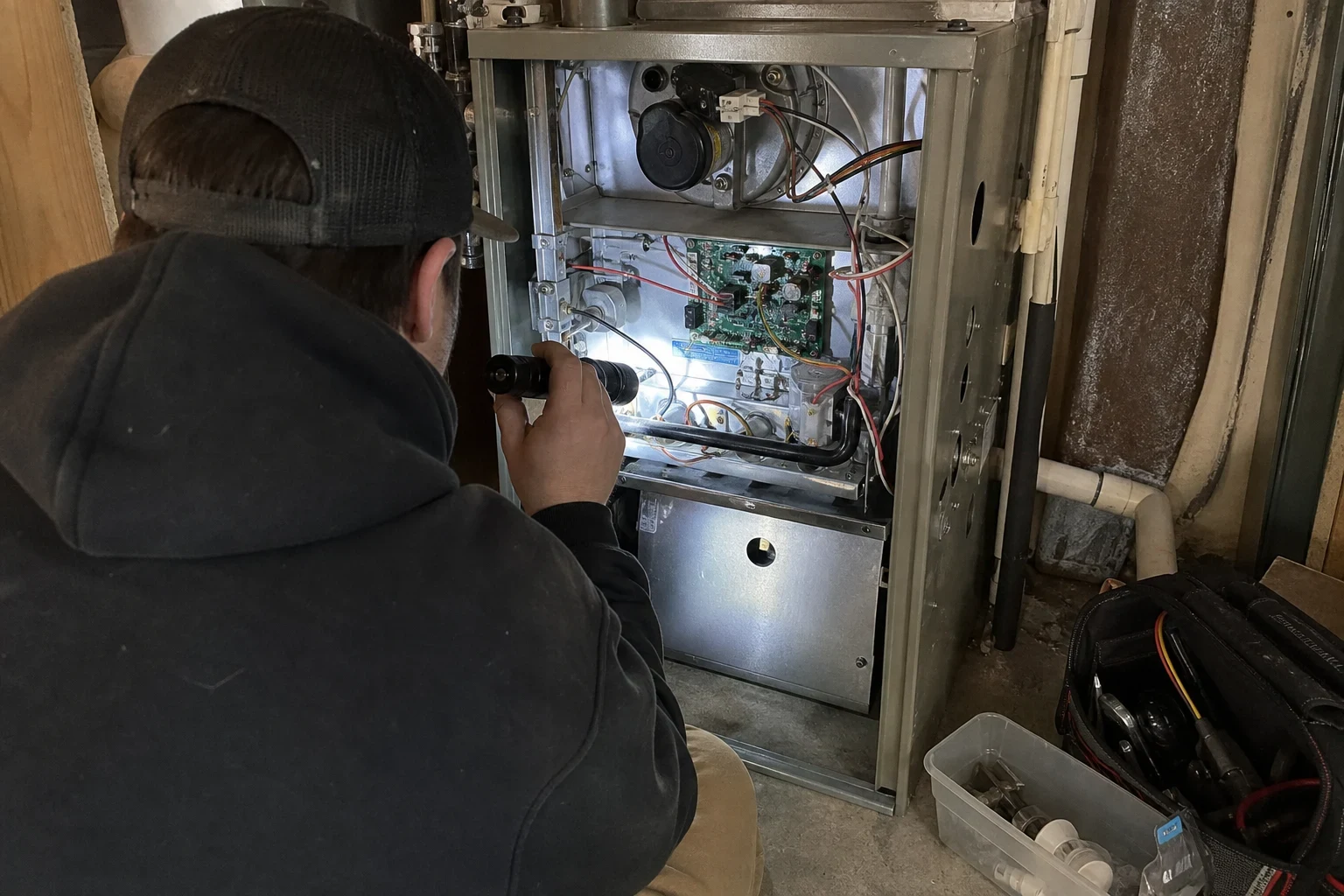
ServicesFurnace Repair
Furnace Repair in Liberty Lake
If your furnace stops heating, keeps cycling on and off, or pushes cool air through the vents, we track down the cause and repair it. A written quote comes first, along with a straight answer on how many winters it likely has left, so you can plan.
Fix it now, plan for later
Most furnace calls come down to a handful of parts. A dirty flame sensor, a worn igniter, a weak blower capacitor or a tripped limit switch. These are usually quick repairs once someone tests them instead of guessing.
We do the repair you need today. Then we tell you what we saw inside the cabinet. If the blower bearings are starting to whine or the heat exchanger shows wear, you hear about it now, while you still have time to budget. That beats finding out in January.
If the honest answer is that a repair doesn't make sense, we say so and walk you through furnace installation or a heat pump instead. The choice stays yours.
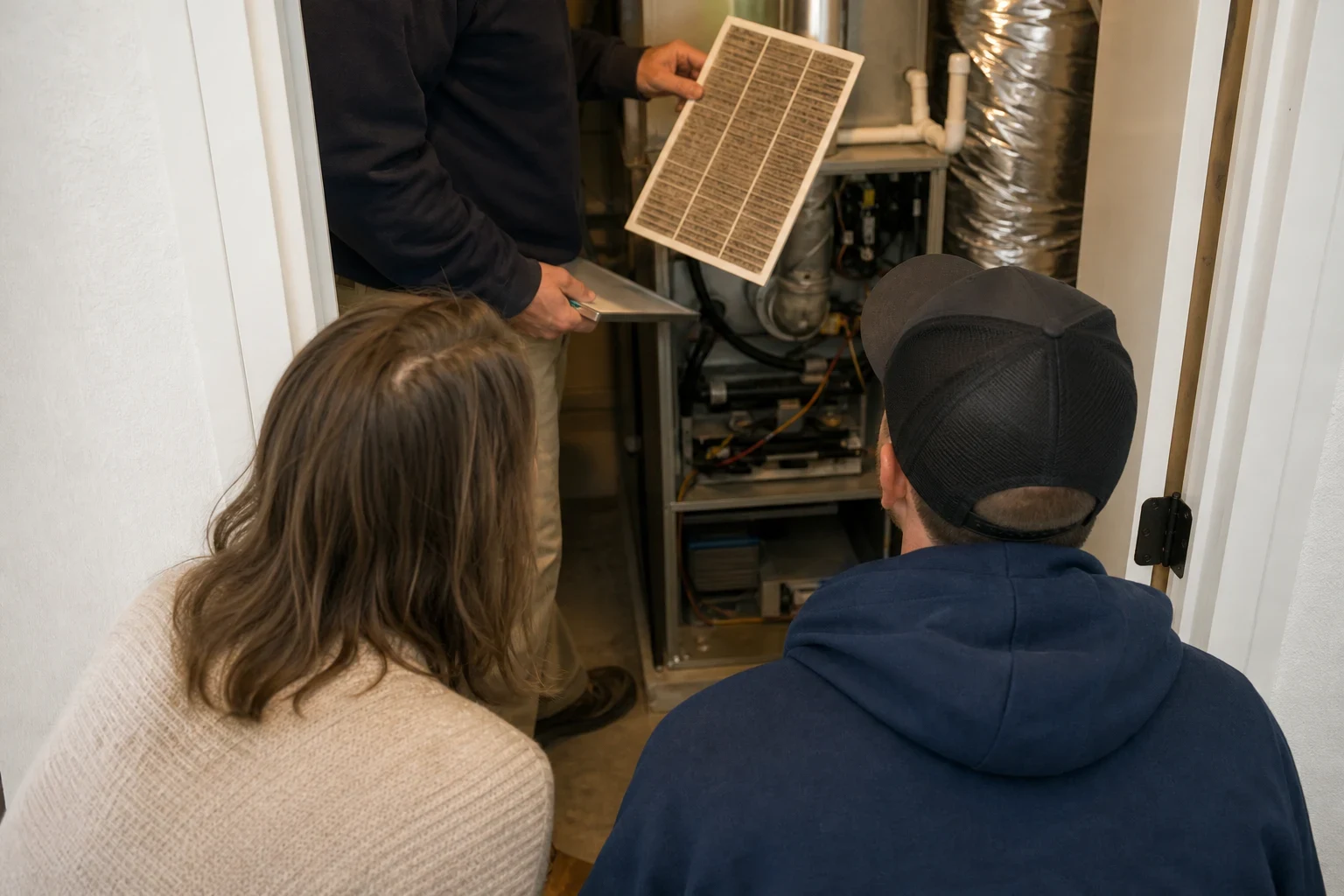
What a furnace repair visit covers
- 01
A real diagnosis
We test parts with a meter and watch the furnace run a full cycle. You pay for the fix that's needed, not a pile of parts swapped to see what works.
- 02
Ignition and flame sensing
Hot surface igniters crack with age, and flame sensors build up a coating that makes the burners shut off after a few seconds. We clean or replace them and confirm a steady light.
- 03
Blower motor and capacitor
A failing capacitor can leave the blower humming but not spinning. We check amp draw, bearings and the capacitor's rating.
- 04
Controls and safety switches
We check the control board, pressure switch, limit switches and thermostat wiring. A switch that keeps tripping is a symptom, so we look for what's tripping it.
- 05
Combustion and venting check
We look at the flame, the draft and the flue connection, and check for signs of a cracked heat exchanger. This is about carbon monoxide, so we don't skip it.
- 06
Filter and airflow at the unit
A clogged filter overheats a furnace fast. We check it, tell you the right size and how often to change it.
Questions about Furnace Repair?
Call(509) 512-0539Signs your furnace needs a repair
No heat at all
Check the thermostat, the breaker and the switch near the furnace first. If those are fine, it's time to call.
Burners light, then shut off
This is often a dirty flame sensor or a venting problem. It tends to get worse, not better.
Short cycling
A furnace that runs a few minutes, stops and starts again is wearing itself out. Overheating and oversized equipment are common causes.
New noises
Squealing points to the blower. Banging at startup can mean delayed ignition, which should be looked at soon.
Cold air from the vents
If the blower runs but the air stays cool, the burners may not be lighting or staying lit.
Gas bills creeping up
A furnace that runs longer to do the same job is losing efficiency somewhere. Catching it early gives you time to plan.
How a repair visit goes
- 1
You call us
Describe what the furnace is doing and when it started. Someone picks up day or night, and a late visit costs the same as a daytime one.
- 2
Testing, not guessing
A tech tests the system and shows you what failed. If you want to see the worn part, we'll point it out.
- 3
You get a written quote
Before any work begins, you get the price in writing. The diagnostic fee is credited toward the repair if you go ahead.
- 4
The fix, then a proving run
Once you say go, we swap or clean the bad part. Then we let the furnace heat your home for a while and stay with it, watching the flame and making sure each safety control trips the way it should. The work area gets swept up before we pack out.
- 5
We tell you what's next
You get our honest take on the furnace's condition, and any parts to watch, so you can budget for them.
What moves the price of a furnace repair
Most of the cost is the part and the time it takes to reach it. You'll know the number before we start, because the quote is in writing. Here's what pushes it up or down.
- Which part failed
- A flame sensor cleaning is a small job. A control board or blower motor costs more in parts.
- Age and brand of the furnace
- Common parts are easy to get. Older or less common furnaces can need special-order parts that cost more.
- Where the furnace sits
- A furnace in an open basement is quicker to work on than one in a tight attic or crawlspace.
- Related damage
- Sometimes one failure takes out another part, like an overheated limit switch from a clogged filter. We'll explain each item on the quote.
Furnace repair questions
Should I repair my furnace or replace it?
It depends on the age, the part that failed and what else we see wearing out. If a repair is reasonable, we'll do it. If you're putting money into a furnace near the end of its life, we'll tell you straight and give you time to plan a replacement on your schedule.
Does it cost more if you come out at night or on a weekend?
No. There are no emergency or after-hours fees. A furnace that quits at 2 a.m. gets the same pricing as one that quits at noon.
What happens to the diagnostic fee?
It's credited toward the repair if you have us do the work. You also get a written quote before anything is fixed, so you decide with the full price in front of you.
What can I look at on my own first?
Start at the thermostat. It should be on heat, set a few degrees above room temperature, with batteries that aren't dead. Next, look at the breaker panel and the on/off switch by the furnace, which looks like a light switch. Pull the filter too. If it's caked with dust, put in a new one and wait a few minutes.
I smell gas. Should I call you?
Leave the house first. Then call your gas utility or 911 from outside. Once the gas side is safe, we can come out and repair the furnace.
How do I keep this from happening again?
A yearly tune-up catches most of these problems early, like a dirty sensor or a tired capacitor. Our maintenance plans include tune-ups, repair discounts and priority scheduling.
Get your furnace back to heating
Tell us what it's doing and we'll take it from there. You'll know the cause and the price before we start any work.