ServicesAC Repair
AC Repair in Liberty Lake
Your AC is blowing warm, running nonstop or not starting at all. We track down the cause, walk you through it and put the price on paper before a single part gets swapped. You make the call. We pick up any hour, with no emergency or after-hours fees.
What AC Repair Covers
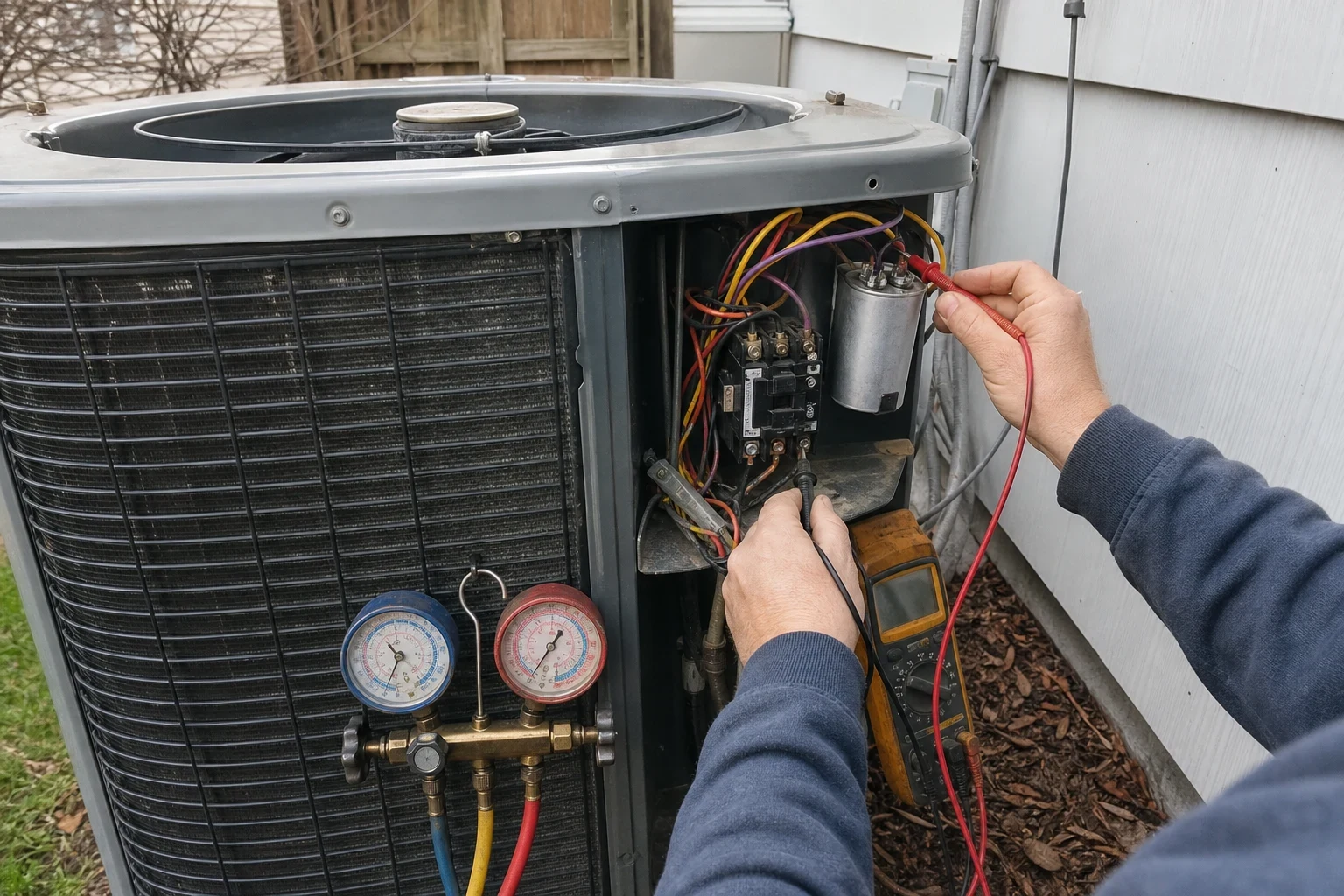
Most AC breakdowns come down to a few parts: a failed capacitor, a worn contactor, a clogged coil, low refrigerant from a leak or a fan motor that has given up. We test each one instead of guessing, so you pay for the part that actually failed.
Repair is the right call when the system is in decent shape and one part has worn out. If your unit is older, leaking refrigerant again or needs a big part like a compressor, we will say so. We can price the repair and a replacement side by side, so you can plan the spend instead of being rushed into it.
There is a diagnostic fee, and we tell you what it is before any testing starts. Approve the repair and that fee comes off the repair bill.
What We Check and Fix
- 01
Electrical parts
Capacitors, contactors and relays wear out from heat and constant cycling. We test them with a meter and replace the ones that read out of spec.
- 02
Refrigerant and leaks
Low refrigerant means a leak somewhere. We check pressures, look for the leak and tell you whether it can be repaired or if adding refrigerant would only buy a few weeks.
- 03
Coils and airflow
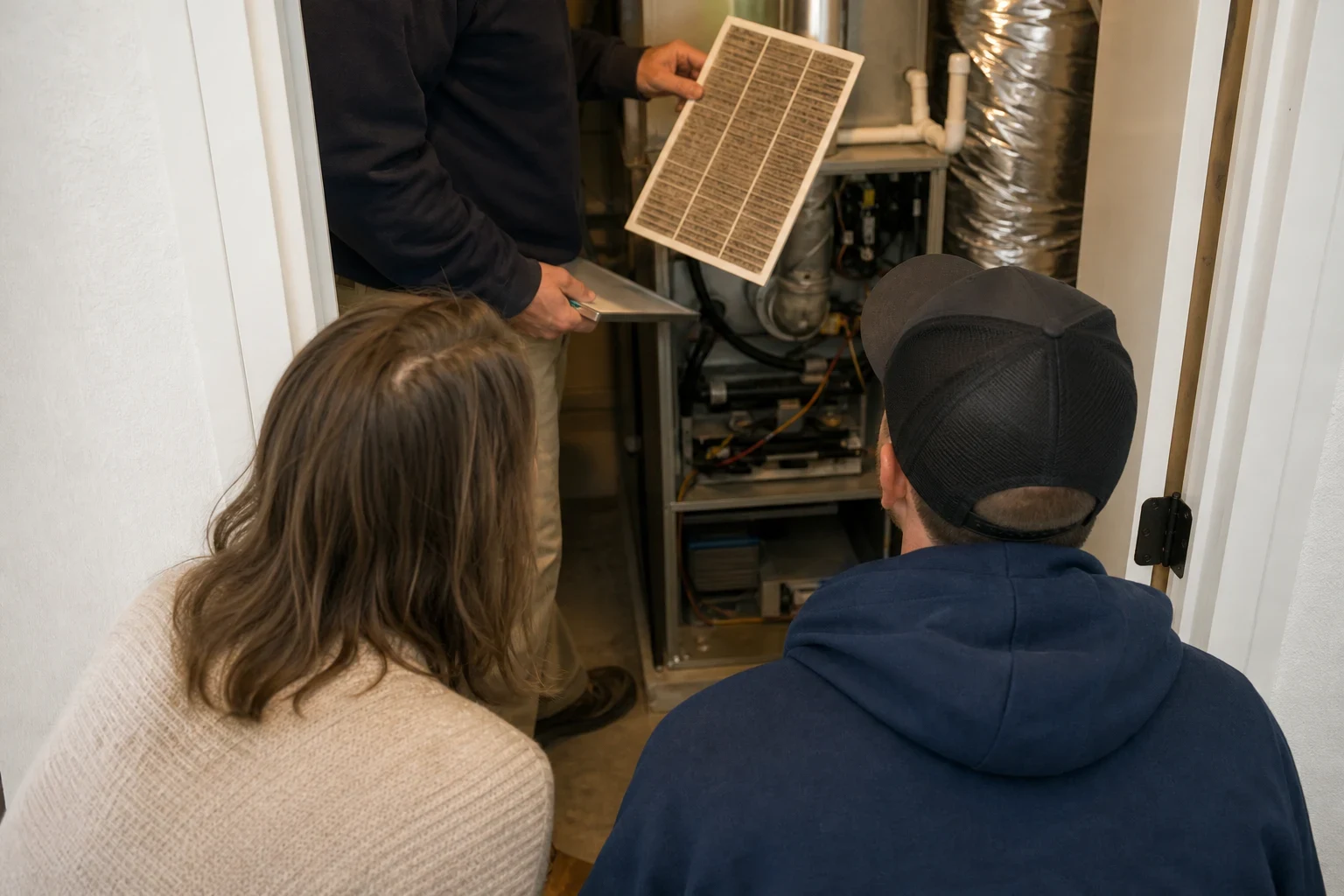
A dirty outdoor coil or a frozen indoor coil cuts cooling hard. We clean what needs cleaning, check the filter and find out why the coil iced up.
- 04
Fan and blower motors
We check the outdoor fan and the indoor blower for bearing noise, weak starts and overheating, then replace motors that are on their way out.
- 05
Controls and wiring
A dead thermostat or a broken low-voltage wire can look exactly like a failed AC. We check these first, which keeps you from buying parts the system never needed.
- 06
Drain line
A clogged condensate drain can shut the system off or leak water into your home. We clear it and make sure it drains freely.
Questions about AC Repair?
Call(509) 512-0539When It's Time to Call About Your AC
Room-temperature air
Air is moving through the vents, but it isn't cold. A weak capacitor, low refrigerant or an outdoor unit that won't kick on are the usual causes.
It runs and runs
On a hot afternoon a long run time is normal. If it never shuts off and the house still will not cool down, something is wrong.
Ice on the lines
Frost on the copper line or the indoor coil usually means low refrigerant or poor airflow. Turn the system off and let it thaw before it does more damage.
New noises
Buzzing, clicking, grinding or squealing tells us which part is failing. Catching it early is almost always cheaper than waiting for it to quit.
Water near the furnace
A puddle by the indoor unit usually means a clogged drain line or a cracked drain pan.
Higher power bills
If your summer bill jumps and your habits did not change, the system is working harder than it should.
How a Repair Visit Goes
- 1
You call, we set a time
Tell us what the system is doing. We ask a few questions and get a tech headed your way, day or night.
- 2
We diagnose it
We test the outdoor unit, the indoor coil, the controls and the refrigerant. We show you the failed part or a photo of it.
- 3
You get a written quote
Before any work begins, you get the price in writing. If the system is near the end, we tell you that too and what a replacement would look like.
- 4
We fix it and test it
Most repairs are done on the first visit with parts from the truck. We run the system, check temperatures at the vents and clean up before we leave.
What Moves the Price of an AC Repair
Every repair is priced from what we find, and you see that price in writing first. Small electrical parts are on the low end. Refrigerant work and major components cost more. Here is what makes the difference.
- Which part failed
- A capacitor or contactor is a quick swap. A fan motor costs more, and a compressor is a major repair that deserves a repair-or-replace talk.
- Refrigerant type and amount
- Older systems that use R-22 cost more to recharge because that refrigerant is no longer made. Finding and fixing the leak also adds time.
- Age and parts availability
- Parts for newer systems are easy to get. Older or less common units may need a part ordered, which can mean a second visit.
- Where the equipment sits
- An indoor coil squeezed into an attic or crawlspace means more labor hours than one sitting in an open basement or garage.
AC Repair Questions
Is it worth fixing my old AC?
It depends on the age, the part and how often it has broken. If a 15-year-old unit needs a compressor, replacing it usually makes more sense. If a newer unit needs a capacitor, repair it. We give you both numbers so you can decide and budget.
Do you charge more at night or on weekends?
No. We have no emergency or after-hours fees. A repair at midnight is priced the same as one at noon.
What does the diagnostic fee cover?
It pays for the trip out and the testing it takes to pin down the problem. Say yes to the repair and that fee comes off your final bill. We tell you the amount when you call, so nothing about it is a surprise.
Can you just add refrigerant?
We can, but refrigerant does not get used up. If it is low, there is a leak. We will tell you where it is and what fixing it costs, so you are not paying to refill it every summer.
How do I keep from needing repairs every year?
A yearly tune-up before the heat starts catches worn parts early. Our Maintenance Plans cover tune-ups and priority scheduling, which helps you spread out the cost instead of facing a surprise bill.
AC Not Keeping Up?
Tell us what it is doing and we will find out why. You get the price in writing before we start, at any hour and with no after-hours fees.